Question 1
GeneralA 50-year-old smoker with established CAD wants to quit. The most appropriate evidence-based pharmacotherapy for smoking cessation is:
FACEM Fellowship Written · 4,187 questions live
Over 4,000 Australasian-referenced MCQs with structured explanations and visual cards, growing weekly. Built for the FACEM Written.
No credit card required. Cancel anytime.
Try one · Cardiovascular
A 50-year-old smoker with established CAD wants to quit. The most appropriate evidence-based pharmacotherapy for smoking cessation is:
Illustrae explanation cards
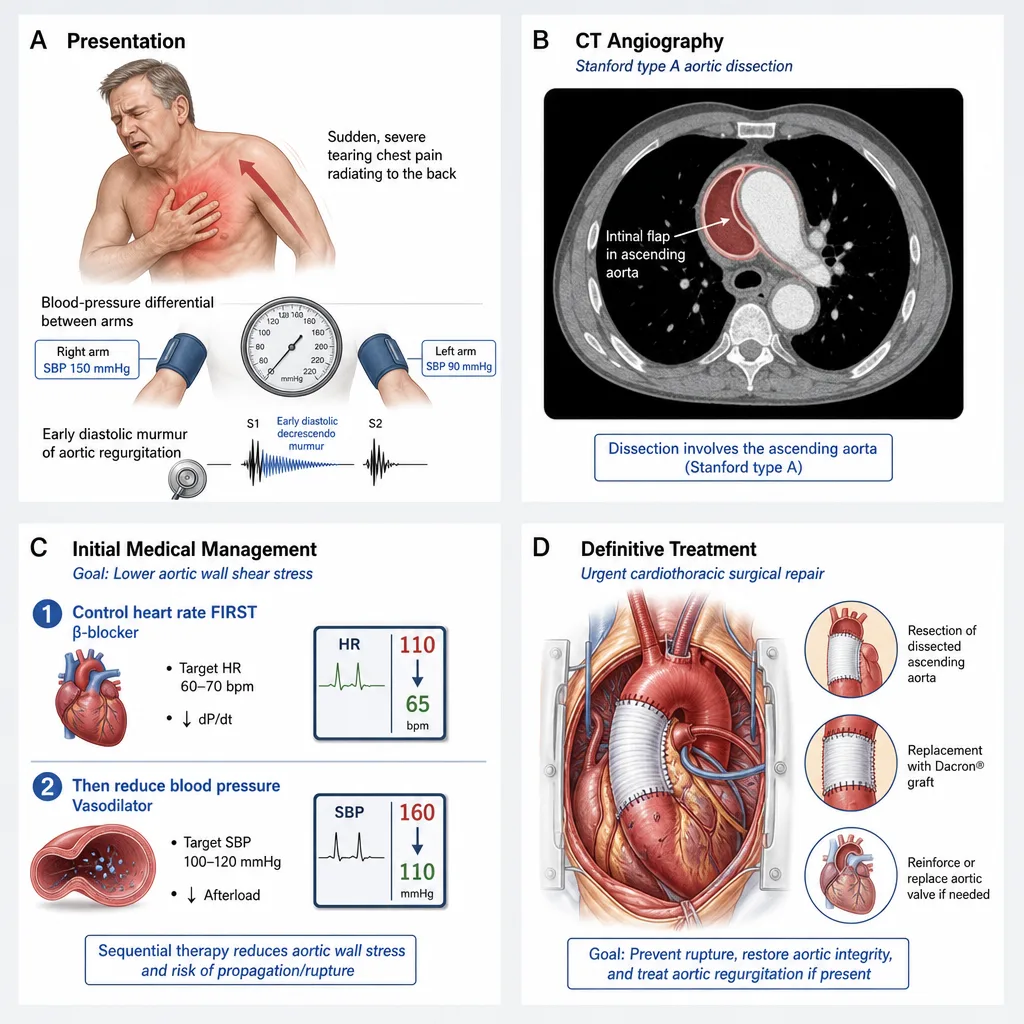
Every image-based question ships with a purpose-drawn infographic card: presentation, imaging, management, and the bottom line on one canvas. Not stock art. Each card is drawn for its question and released only after clinical verification.
What's inside
Learn with instant structured explanations, or simulate exam pressure with a countdown and feedback at the end.
Full access from the first minute of your trial. Your history, notes, and flags are kept forever, whatever your plan.
Answers queue offline and sync when you reconnect. Close the laptop mid-session and resume on your phone.
First-attempt accuracy across 20 body-system categories, down to the subtopic, so you always know where to study next.
Purpose-drawn infographic cards accompany image-based questions: ECGs, imaging, procedures.
Why the right answer is right, why each distractor is wrong, the bottom line, and the source. Every question cites Australasian-aligned guidance.
Same patient, different medicine
The exam is set in Australasian practice. So is the bank. Here is the same clinical question answered by a bank referenced to US practice, and by us.
Snakebite first aid
First aid for a snakebite to the leg.
A US-referenced bank
Pressure immobilisation is discouraged. North American pit-viper venom is locally cytotoxic, so bandaging it in place does more harm.
MedQVault · Australasian
Firm pressure immobilisation over the whole limb, then splint it and keep the patient still. Australian elapid venom is neurotoxic and clots the blood, so slowing lymphatic spread buys time and costs nothing.
Cited: Therapeutic Guidelines: Toxicology; ANZCOR first aid
Pneumonia antibiotics
Empirical antibiotics for a well adult admitted with community-acquired pneumonia.
A US-referenced bank
Broad by default: a respiratory fluoroquinolone, or ceftriaxone with a macrolide, sized to US resistance.
MedQVault · Australasian
Benzylpenicillin or amoxicillin, with doxycycline or a macrolide for atypical cover. Local pneumococcal resistance is low enough that narrow is the right call.
Cited: Therapeutic Guidelines: Antibiotic
Paracetamol overdose
N-acetylcysteine for a significant paracetamol overdose.
A US-referenced bank
The three-bag acetylcysteine schedule over 21 hours, still the default in most US references.
MedQVault · Australasian
The two-bag regimen. It drops the early high-concentration infusion and the anaphylactoid reactions that come with it.
Cited: Austin Health paracetamol poisoning guideline; Therapeutic Guidelines
Rural retrieval
A time-critical patient at a small hospital three hours from a tertiary centre.
A US-referenced bank
Ground ambulance to the nearest hospital, inside a dense network of trauma centres.
MedQVault · Australasian
Aeromedical retrieval. A critical-care team flies out and the patient flies back, because the nearest suitable hospital can be hundreds of kilometres away.
Cited: State retrieval services (RFDS, Adult Retrieval Victoria)
Want to see how far one explanation goes? Read a fully annotated question →
Who writes this
Written and reviewed by practising FACEMs.
Every question is written to a documented style guide and quality framework, and cites an Australasian-aligned source.
Work through real sample questions from every category, right here, no account needed. You get the stem, the options, the explanation, and the source.